Breakfast Television Interview

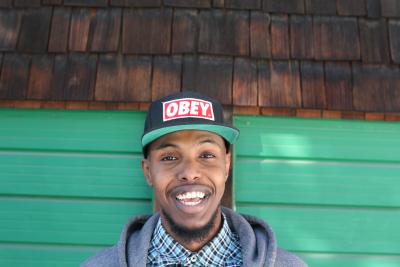
This Breakfast Television Interview happened at my apartment on January 20th 2015. We were speaking about how unfortunate it was that Somali youth were dying and being arrested for violent crimes here in Edmonton. And how Somali Edmonton youth were being tied to terrorism. The truth is, those numbers are very small, but still detrimental to the image of our community members who are doing great things. The media plays an immense part on molding peoples perspective. And If they continue to see such stories, it might influence their perspective on Somali Canadians as a whole. Fortunately, there are a lot of us who are doing great things in our communities. Somali’s aren’t all related to pirates and or sending money to fund terrorism. Not all of our youth are involved in crime related activities. There are painters, photographers, politicians, engineers, doctors, lawyers, models, DJ’s, poets, nurses, radio personalities, hosts, comedians, actors, should I keep going? Cause I can! I am not an expert on why these unfortunate events are taking place, but I do know that the Somali youth are up to great things. They are growing into their respective fields, soon you will see the color of their fruit.

Word Bridges

Two communities will come together this month at Edmonton’s Poetry Festival: The page poets and the stage poets.

Says Jannie Edwards, vice president of the festival’s board: “We are looking at bridging between oral traditions and printed page traditions, music and poetry; between cultures, between writers who are both novelists and poets, history and poetry, burlesque and erotic poetry. We’ve tried to dramatize that and bring that theme to life.”

The artists involved with this year’s festival only drive that point home, including Edmonton’s current poet laureate Mary Pinkoski and entertainer Ahmed Knowmadic.

Pinkoksi and Knowmadic were both members of Edmonton’s winning national slam poetry team in 2011. “Mary went on to the spoken word scene and got recognized by that audience. Spoken word is accessible,” says Knowmadic, who identifies himself more as an entertainer than a poet. “The festival brings people who have never seen that style of poetry and they get to see it and appreciate it.”

Knowmadic, 29, is a member of Edmonton’s poetry collective, which coordinates its slam finals with the Edmonton Poetry Festival. Slam poetry is the competitive aspect of spoken word poetry, says Knowmadic. His performances often include a mix of poetry, story telling and comedy.

He began writing at a young age, after he moved to Canada from Somalia at the age of eight. “My ESL teacher is the one who encouraged me to write creatively, and through that, I would try to write better. Then I grew up and found girls, so I started writing love letters and love poems. Then I found word play, puns. It was an evolution,” he says.

“Before I got into slam poetry, I found poetry, especially stage poetry, at the Edmonton Poetry Festival. I found poetry first. Then I fell in love with spoken word. It fits in with my lifestyle. Spoken word is sharing your honesty.”

The Edmonton Poetry Festival runs April 20 to 27. Click herefor more details.

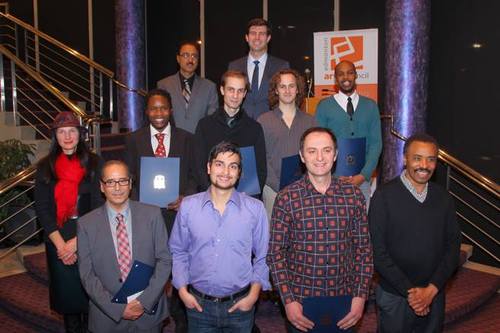
2013 Cultural Diversity in the Arts Award recipient: Ahmed Ali

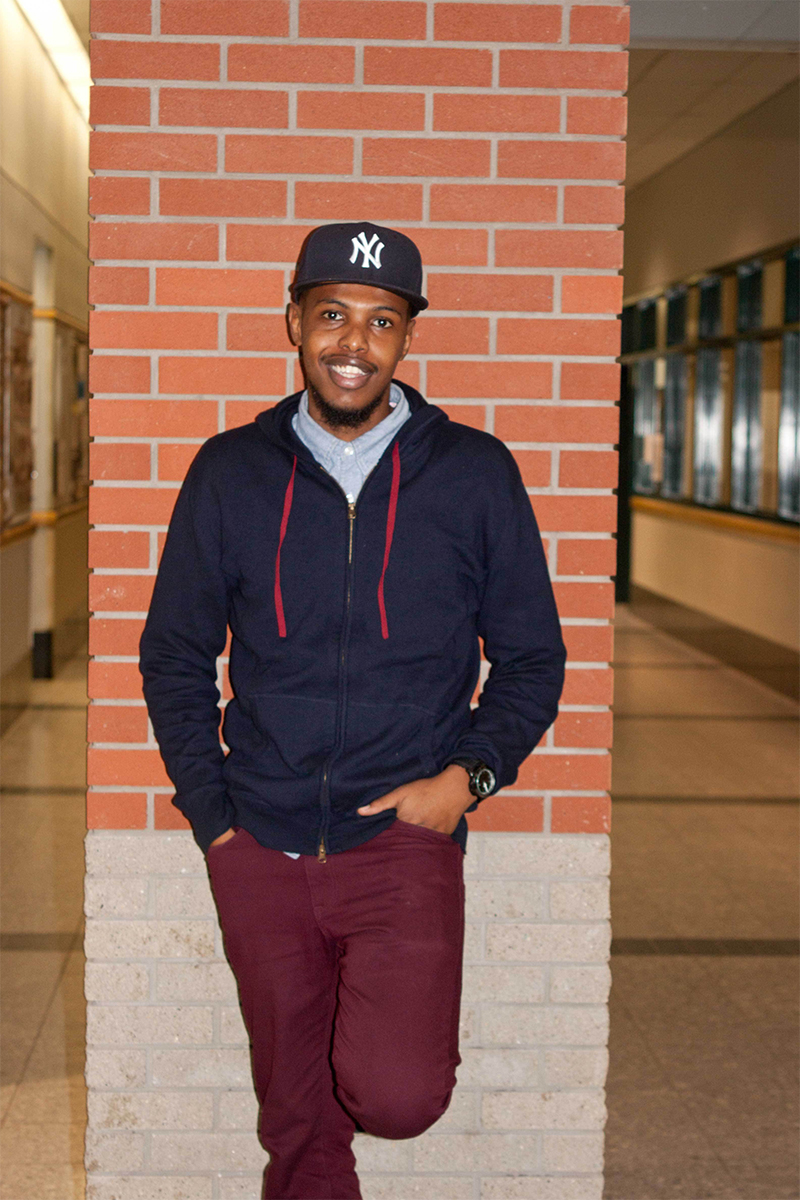
Speaking with Ahmed Ali (aka Knowmadic), you get the sense that the poet, writer, actor and comedian is a continuous learner and not one to limit himself to a single identity. In his school days, Ali combined humour with his self-described “crazy imagination” to make his classmates laugh. He was inspired in part by his English as a Second Language (ESL) teacher, who encouraged him think about pursuing the arts after he was rewarded for his creativity. His father and his upbringing have also been obvious influences.

“Coming from my background, there’s a lot of oral tradition,” explains Ali, who was born in Somalia. “Our language wasn’t written until 1979, so we have a lot of folk tales and proverbs and metaphors in our language. That’s how we passed stories down […] And my father would lecture me a lot growing up and talk about art and different songs.”

Ali has not only been nomadic in the cultural sense, he’s also been nomadic when it comes to arts disciplines. He began writing in his early teens, and at age 16 became involved in theatre. When he was 20, he attended Humber College in Toronto to study comedy, before dabbling in spoken-word poetry five years ago upon arriving to Edmonton from Toronto.


Despite his many gifts, Ali describes his artistic journey as “rough” and far from being complete.

image “The most difficult challenges [were] the knowledge of where to go for the arts and also having the knowledge of how to deal with arts, ‘cause I don’t have the business mentality. I’ve never had anybody in my family who’s a successful artist, nobody in my culture that I knew directly that I could speak to who had any success,” he says. “Especially now that I’m doing spoken word poetry and it’s been a long time, there’s still barriers. People don’t look at me like, ‘Oh my God you’re a great writer!’ They look at me like, ‘Oh my God, a Muslim man who knows how to speak?’ I know it sounds ridiculous, but it almost comes off like that. It doesn’t come off like ‘Wow, great work!’ So there’s always that cultural barrier.”


image

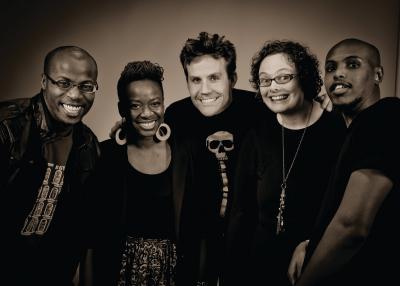
Despite that, Ali says he sees struggles as opportunities for growth and has managed to turn his art into his career. He is one of the founding members of theBreath in Poetry Collective, which provides a weekly platform for poetry and music and made a return from the holidays in early February. The idea behind the collective began in 2009 with fellow poet Titilope Sonuga. During the first year of hosting poetry gatherings together at Rouge Lounge, the collective struggled to get more than five poets out each week. The following year, the attendees grew to 20, then doubled in size after that. This year, Ali observes more than 70 people who are coming out to Rouge Lounge.

“Now, we have probably too many poets, which is a good problem!” Ali notes that the proportion of new audience members can be as high as 75% on a given week. “So their friends are spreading it. It’s a beautiful thing.”

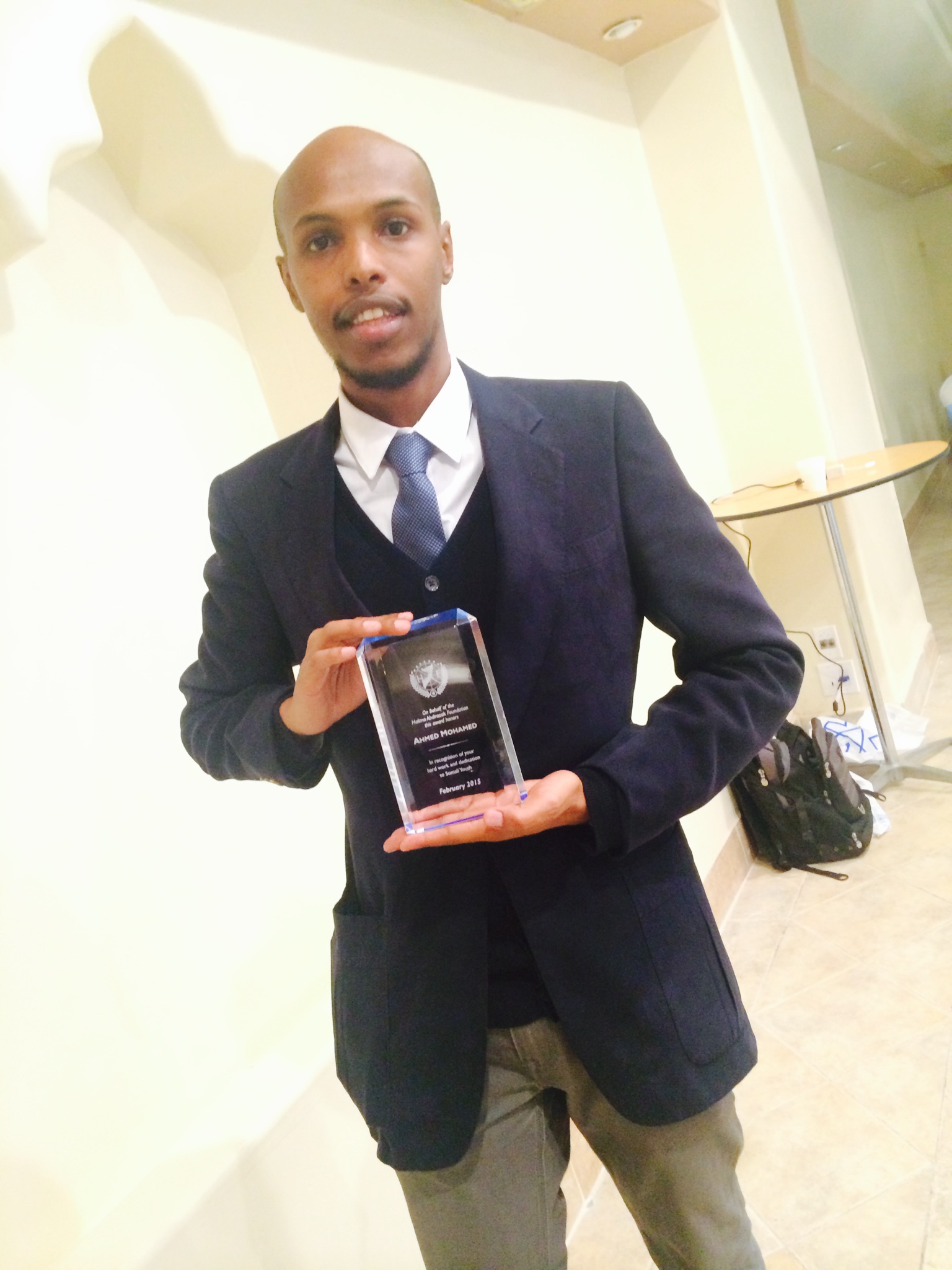
Ali has received much recognition for his work in the arts and within the community. He was recently chosen to be one of the Alberta Council for Global Cooperation (ACGC)’s Top 30 Under 30, and was a recipient of the Edmonton Arts Council’s 2013 Cultural Diversity in the Arts Award. He also received an EAC Travel Grant to attend the Hillside Festival in Guelph in 2013. With the Cultural Diversity in the Arts Award, Ali hopes to publish a book, create a record and educational videos.

 
image
 

Ali credits a huge part of his success as an artist to living in Edmonton. He returns to the Somali tradition of using proverbs to describe the city’s support for the arts.

“I say, ‘An artist’s soil is their community: if they’re not growing, they’re in the wrong field’. In my opinion, Edmonton is very fertile; it’s very supportive. Being an artist, if it wasn’t for Edmonton, I wouldn’t be who I am today. I’ve been here for 5 years, and I’ve been able to accomplish what I have because I’m in Edmonton. I don’t think I could have done it anywhere else.”

On top of all his existing projects, Ali is also currently working with Alberta Education, the Edmonton Public School Board, and the Alberta Teacher’s Association to bring diversity, culture and optimism to the classroom. He provides weekly workshops to students at Jasper Place High School, and throughout the month of February for Black History Month, he provided poetry workshops to students at M.E. LaZerte High School. As a final project, students will present their poems at an assembly for anti-bullying.

When it comes to encouraging newcomer artists, particularly youth, Ali offers some poetic words of wisdom:

“It is honestly just to say: Never think of your identity or your culture or your language as a barrier. Once you do that, you allow your mind to perceive that and become a reality. In my honest opinion, the greatest deficit is our own mind. We have to overcome, ‘cause as minorities – yeah, we went through customs, and we go through customs; we were questioned a lot, but we customs ourselves all..day..long! We go through customs everyday! We ask ourselves, ‘Where you going? Why are you going there? Are you white enough? Are you black enough?’ So the biggest problem is overcoming your own insecurities and realizing that you are an original copy in a world of 7 billion people and that nobody thinks the way you do; nobody speaks the way you do; nobody lives the way you do. And that is why it is important to continue your art regardless of how difficult it gets. Growth comes in spurts; mistakes are important. Optimism 100%. If you look at things as a growth, and if you always look at things as a means to get better, you’ll never lose.”

image

Check out Ahmed Knowmadic through:

Twitter: www.twitter.com/Aknowmadic Facebook: www.facebook.com/Ahmedknowmadic

Breath In Poetry Pits Verse Against Verse

Ready to battle, Ahmed “Knowmadic” Ali took the stage of the 2011 Canadian Festival of Spoken Word competition in Toronto. His only weapons were the words he hurled through the searing lights into the hot, dark, packed room. Somewhere out there was a clock ticking down his time. He couldn’t see it, but he knew he had three minutes from the time he started speaking.

This is slam poetry, a literary offshoot of hip-hop freestyle battles. The competitive breed of spoken word slams the audience with left-hook lines, and slams the competition with right uppercuts of battle-honed intellect.

It was Ali’s team, spawned by Edmonton’s Breath in Poetry Collective, or the BIP, that won the 2011 Canadian championship. He shares the trophy with Mary Pinkowski,Colin Matty, Liam Coady and Chris Krueger, the Edmonton team’s alternate who wasn’t required to read thanks to the strengths of the other four. Alone, Ali won “Line Most Likely to Appear on a T-shirt” for the refrain and title “I am Africa,” and Pinkoski walked away with “Most Valuable Poet.”

It was the second time the BIP sent a team to the nationals, which rotates between cities like the Grey Cup, but this was its first taste of gold. Leaving Toronto, the members knew that they’d now spend the next year battling against each other and others to determine which five will make the 2012 team, selected at this month’s finals hosted by the Edmonton Poetry Festival. “It’s a competition of course,” says Ali, “everyone wants to win.” But, he says, they don’t let that hurt their friendships back at home.

“You have to put everything from last year behind you,” says Titilope “Titi” Sonuga, who created the BIP and competed at the nationals in 2010. (“I’m too sensitive to compete anymore,” she admits.) She says the dynamic is one more of encouragement than competition, though she guesses “that dynamic might change a bit after having to challenge a title.”

Sonuga, a Nigerian-Canadian civil engineer and author, founded the collective in 2009 because she didn’t fit in the local poetry scene, which she thought was too formal — often the events were staged in libraries and cafes instead of open-late venues, with on-script readings instead of passionate, memorized performances. While Sonuga says her material went over well with audiences at these events, she felt she was treated more like a novelty than a legit poet. “It felt almost like I became a piece you’d see in a museum,” she says, “sort of ‘the African girl who does poetry right from her head!’ I was no longer comfortable with that dynamic.”

Sonuga thought emerging poets simply needed an energizing stage on which to lose their performance-virginities. With co-founder Bert Richards (a.k.a. Dirt Gritie of rap group Politic Live) she organized a series at Rouge Lounge, an electric-red downtown bar with mod charm.

Three years later, it still hosts “Rouge Poetry” on Tuesday nights and routinely packs the house. Other organizers, such as Ali, Pinkoski and Krueger, joined the collective to help attract new and renowned arists, but when Sonuga first started, only her sister and brother-in-law sat to hear her. The game changer? Adding slams during the second year.

A far wail from dreary, droning English class recitals, the modern slam is more nightclub than book club. “It’s a little bit like open heart surgery,” says Sonuga. “It’s a combination of performance and pure truth. Poets from every walk of life come to the microphone with no censorship.”

“Once you step into the night,” Ali says, “you’ll see it’s not a bar, it’s not a restaurant; it’s a lounge.” With club beats pumping from the sound system, Rouge Poetry attracts people who’ve come “dressed to impress, wearing perfume, cologne, a flower in the hair.” But it also attracts unassuming people, who are attracted to the purity of the art.

For Ali, Edmonton slams changed his artistic DNA. A political science student originally from Toronto, he had a background in stand-up comedy and “absolutely no idea about spoken-word” until the Edmonton Poetry Festival introduced it to him. Looking to experiment with the art, he and his encouraging brother headed to an open-mike event at the Carrot Café. They stepped in, his brother surveyed the older, predominantly white audience, and told him, “You’re not going to fit in.” So, Ali kept silent.

He looked elsewhere and found Sonuga’s series and an audience that understood his style. And, for two consecutive years, that series and those audience members helped propel the natural talent to the Canadian finals.

The style differences among the national team are clear, says Pinkoski, winner of the 2008 CBC National Poetry Face-Off, who joined the collective in 2011, and uses her veteran connections to book headliners from across Canada. Coady and Matty, for example, both use their acting skills on stage — Coady’s a member of the Citadel’s Young Actors Company while Matty is part of Rapid Fire Theatre.

“I come from a narrative-driven spoken word style, while Colin and Liam’s poetry is influenced by their [theatre] backgrounds,” says Pinkoski. “Chris has a musical and acting background as well, and Ahmed has a diverse background of comedic and acting talents. [It all] contributes to a strong team built on a rich foundation.”

The national competition, which put them against 19 teams, isn’t just tough — it’s tense. By the last night, nerves are as brittle as glass, because by then most teams have exhausted their best poems. According to Ali, it didn’t help that they faced anti-Western Canada biases and received unflattering comments that tarred them as uncultured before they’d even opened their mouths. “It was like they didn’t even think poetry existed in Edmonton.” Not a problem, he says, it pushed his teammates even harder to gain the title and, not to mention, respect. Afterward, even the host expressed his surprise, and admiration, that Edmonton took the prize.

Having competed at nationals herself, Sonuga says the end experience is more like “summer camp,” with competitors achieving camaraderie despite defeat for all but a single team. How that camaraderie will be tested — now and among their circle — could be just as exciting as the poetry slam at the Artery on April 24, where they’ll battle each other to find out who will represent the city once more at the nationals in October.

Ahmed Knowmamdic Ali

Ahmed Ali: The life of a poetic Knowmad

D. C. Johnson
Arts Editor

What: Spoken word artist Ahmed Knowmadic
Where: The Carrot Community Coffee House (9351 118 Ave.)
When: Feb. 22, 7:30 p.m.
Price: $5 donation at the door 

Inspiration is like a drug for artists, says Ahmed Ali. But the Somali-Canadian spoken word poet never seems to run out of fodder — this might stem from his background.

Ali’s alias, Ahmed Knowmadic, reflects both the poet’s love of wordplay and the wanderlust that has permeated his life.

“Now I’m moving from place to place for knowledge. So now, instead of being a nomad, I’m a knowmad,” he says.

“Now I’m chasing knowledge, and I’m spreading knowledge instead of chasing herds or animals.”

When Ali was four, his father, the first of his family to give up the nomadic lifestyle for the city, moved his family to Italy.

At age eight, Ali and his family picked up and left again — this time for Canada. Ontario, specifically. Because of the move, the 2011 Canadian champion of spoken word took English as a second language for four years.

In 2008, Ali moved to Edmonton and began studying political science and psychology. Though he had been writing since the age of 16, Ali wanted an outlet for his creativity.

His girlfriend suggested that he perform at the Edmonton Poetry Festival — he bombed, but that didn’t stop him.

Ali’s gotten better since, and now works as a full-time poet. This career choice involves less-than-standard fare: voluntarily running the poetry night at Rouge Lounge, performing in different cities and putting on workshops in schools around the country.

“When I do workshops, I try to get the idea across that everyone is a poet,” he says.

This attitude and his poetry seem to strike a chord with the students he teaches. Ali recalls, after reciting poetry during a workshop, a kid in a Slayer t-shirt came up to him in tears.

Often, the poet is inspired by youth, rather than adults. Once, a high school student wrote a striking poem. Afterward, a teacher came up to Ali and told him that the student was shy and never spoke in class — the beauty and passion behind the piece shocked Ali.

Traveling and teaching aside, Ali draws inspiration from what’s happening in the world — perhaps this is a product of his time in poli-sci.

He has appeared at Palestinian solidarity events, and has recently begun working on a poem about the Idle No More movement. With his work, Ali wants to act as a “freedom fighter” and a “truth seeker” and send a positive message and wisdom to wherever he finds himself.

Before the poet puts pen to paper, he meticulously researches the topic about which he writes. However, Ali purposefully injects elements of himself into his work.

“Otherwise, it just comes off as me just trying to impress people with words,” he says.

But not all of Ali’s work is political. The 28-year-old’s long list of experiences affords his work a level of variety.

The poet notes that, while some people cry at the injustices in his poems, a poet needs diversity to be successful — he can wax funny or sad, romantic or political, but always personal.

“It’s very diverse. I would like to say the majority of it is about Africa. But it is very diverse. I like to talk about ignorance; I talk about love; I talk about struggles. I talk about my father,” he says.

“I talk about when I went to my country and saw a child soldier. It’s very diverse. It’s not specific to one thing.”

Ali, who also performed stand-up comedy, tends to add elements of comedy and wordplay into his poems. In one of his pieces, titled “Ignorance,” the poet poses as a sort of infomercial announcer, advertising, ironically, symptoms the ignorant would want a cure to.

“It’s like ‘do you suffer from terrorism? Do you wake up in the night seeing Asians? Are you fearful of Mexicans; borders?’ It’s pretty much saying don’t be ignorant. I know this is funny, but the message still comes across, and people really like it. It’s not too heavy . . . Let’s understand each other. We have minor differences; there are more similarities than there are differences, so let’s foster those.”

While Ali might be more comfortable performing his older works, such as his first poem, “Mama Africa,” reciting new works is always a worthwhile, if nerve-wracking, experience — maybe there isn’t an emotional attachment to it yet, or maybe it’s simply unrehearsed.

“I’m always nervous that it might not come off well, or I might not be a good enough poet, and it keeps me humble, and I really like that fact.”